
Voice 1
Welcome to Spotlight. I’m Marina Santee.
Voice 2
And I’m Roger Basick. Spotlight uses a special English method of broadcasting. It is easier for people to understand, no matter where in the world they live.
Click here to follow along with this program on YouTube.
Voice 1
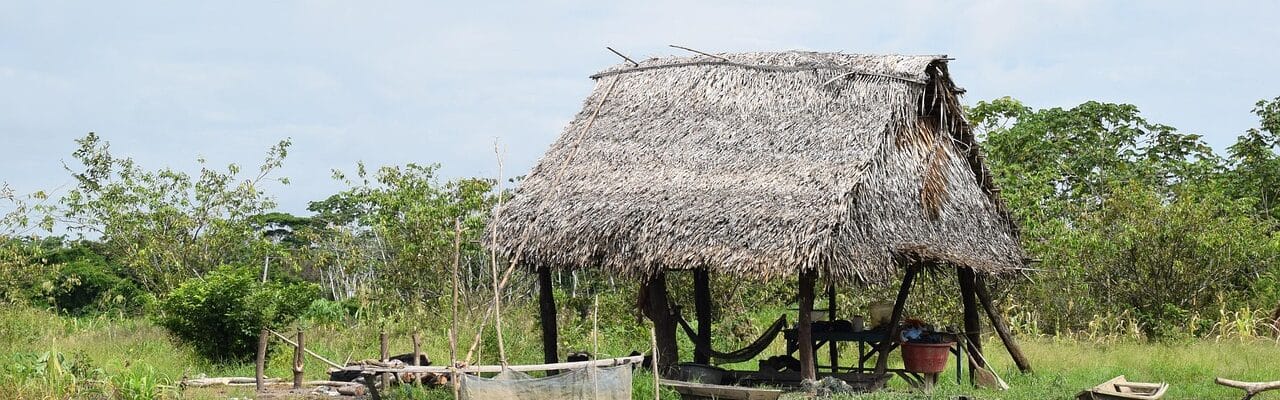
The Upano Valley is a place in southern Ecuador. For as long as most people can remember, it was covered by the Amazon rainforest. Few people lived there. But the forest held a secret. Below the trees was a group of cities. No one knew they were there for over a thousand years.
Voice 2
Today’s Spotlight is on these hidden cities of the Upano Valley. A recent discovery, these cities change the way that experts see the peoples of the Amazon. They display a special culture that is new in the history of the world.
Voice 1
The cities of the Upano Valley were first discovered in late 2023. Experts knew that there were structures in the area. However, they did not know how many, or how large the structures were. To find out, they examined the ground with a technology called LiDAR. LiDAR uses lasers to measure the distance between objects. An airplane can examine the ground with LiDAR. It can make a very precise map of what is there.
Voice 2
The LiDAR examination showed a large complex of cities. There were temples, houses, and roads. The structures were not made from stone like other cities in South America. The buildings were dirt hills. Some of these buildings were created by moving earth. Some were once hills that the people there shaped into structures. The LiDAR examination discovered over 6,000 of these structures in the area.
Voice 1
Experts estimate that these structures are thousands of years old. They believe that the culture that built them lived in the area in 500 BC. They deserted the cities around 600 AD. This means that the cities were in use for 1,000 years. This is longer than most other cultures in the area. And it is a longer time than even the Inca or Maya cultures.
Voice 2
One of the most interesting parts about these cities is their roads. Most roads in ancient times followed the landscape. They went around hills because it is easier to build that way. But the roads in the Upano Valley are perfectly straight. They go over, and even sometimes through, hills. The people there dug some of them as deep as five meters. This is a difficult thing to do even today.
Voice 1
Stéphen Rostain is an archaeologist at the National Centre for Scientific Research in France. An archaeologist is someone who studies ancient cultures. He led the studies that discovered the Upano Valley cities. He spoke to the British Broadcasting Corporation about the mystery of these roads:
Voice 3
“Why would you build these straight roads five meters deep? You can easily walk through the hills. I think they built them to mark their identity. They are symbolic roads.”
Voice 2
The people of the Upano Valley also constructed their cities in a unique way. In almost every culture, cities are centralized. A concentrated group of people live within closely built structures. People who grow food, such as farmers, live outside cities. But in the Upano Valley civilization, farms were part of the city. Large pieces of farmland separated different home groups. But the buildings are still close enough to be called a single city. Other civilizations pushed the environment outside of their cities. But the people of the Upano Valley built their cities within it.
Voice 1
It is difficult to know what the society of the people of the Upano Valley was like. But evidence suggests that they had a complex society. Again, Rostain spoke to the British Broadcasting Corporation about what the people may have been like:
Voice 3
“The people living in these societies did not move around. They were not lost in the rainforest looking for food. They were not the small tribes of the Amazon we know today. They were a highly specialized people. They were earth movers, engineers, farmers, fishermen, priests, chiefs, or kings. It was a layered society. It was a specialized society. It was something like ancient Rome.”
Voice 2
This picture of a cultured society is quite different from the stereotypes of Amazonian people. Often, people portray native Amazonian people as lesser than they are. Or they believe that they are less intelligent than others, because they live by hunting and gathering their food. Historians sometimes backed up this unfortunate way of thinking. Because no one found a complex civilization, some did not think these native people capable of one. People wishing to take native land use this as an excuse. But the Upano Valley civilization proves this false. Native Amazonians were just as capable of making complex societies as their western counterparts. And they did it in a unique way that let the environment in.
Voice 1
We do not know why the people of the Upano Valley deserted their cities. There may have been wars, or other conflicts. But experts believe it was probably owed to natural disasters. The Upano Valley lies below the Sangay Volcano. The ash from the volcano would have helped the city’s crops grow quickly. But volcanoes are dangerous to live near. A large explosion could have made it difficult to survive there. Ash from a large explosion could have made sunlight difficult to reach. It may have killed off crops, and even changed the climate.
Voice 2
The discovery of the cities of the Upano Valley is an important scientific discovery. Until recently, experts believed there were no large cultures in the Amazon. They believed that the native population lived as they do today, as hunters and gatherers. This discovery shows that there is a larger history of the native population that we have yet to learn. That history is more interesting and complex than anyone could have understood before.
Voice 1
The discovery is also important for understanding native culture. It shows that the native people of the Amazon could build cities. And they were able to do so in a special way. Instead of destroying the land, they created living spaces within nature. This may help us understand how to design cities in the future. It will be important to listen to native leadership when it comes to this. Manari Ushigua is a leader from the Sápara Nation. He spoke to The Art Newspaper about the discovery of the Upano Valley cities:
Voice 4
“These are holy sites. Protecting them is important. It is not just for our communities. These sites are important for all humanity. They contain secrets about climate change. These secrets can help the Amazonian environment. But they can also help the whole planet. We are suffering from the effects of unrestrained development and environmental destruction everywhere. But if we look to the forest and these ancient places, we can learn a lot.”
Voice 2
Do you know much about the people of the Amazon? Does this discovery change your opinion? You can leave a comment on our website at www.spotlightenglish.com. You can also find us on YouTube, Facebook, TikTok, Instagram, and X. You can also get our programs delivered directly to your Android or Apple device through our free official Spotlight English app.
Voice 1
The writer of this program was Dan Christmann. The producer was Michio Ozaki. The voices you heard were from the United Kingdom and the United States. All quotes were adapted for this program and voiced by Spotlight. No A.I., or artificial intelligence, was used in this program. Spotlight programs are written, voiced, and produced by real people for real people, no matter where in the world they live. This program is called, “The City that Rewrote History.”
Voice 2
We hope you can join us again for the next Spotlight program. Goodbye.
Question:
Do you know much about the people of the Amazon? Does this discovery change your opinion?



I am Severino Ramos. I am from Brazil, and I live in São Paulo City.
Dear spotlight team, Marina Santee, Dan Christmann, Roger Basick, and Michio Ozaki
How are things with you?
The City That Rewrote History
First, I would like to tell you that I think that article is a very interesting one because it tells us about Amazon rainforest and a complex and mysterious issue in which I did not know well. Thanks!
Question 1 –
Do you know much about the people of Amazon?
No, I do not know much about them.
I know a little about Amazon society that I have watched on news television that the Brazilian Journalists have shown us on the screen’s TV. Also, I read a magazine in which talked about Amazonian societies, such as Maya and the Inca. So, I like Amazonian people.
Question 2 –
Does this discovery change your opinion?
No, It does not change my opinion.
I am happy to know that important information from you about Amazon and Upano Valley. Amazon! An important place located in my country. I like the Indigenous people from Amazon and others countries in which there are indigenous people or originating from Indigenous’ people. I like their traditional lifestyles in which is adapted to the climate and their environment.
I would like to meet the Indigenous tribes such as Piripkura, Yanomami, Kayapo, xingu, and etc. from Amazon, but it is difficult to do that because the poor Amazon’s Indigenous have been threaned by power and white people to steal their lands and destroy them.
Fortunately, the Indigenous people of the Amazon rainforest count on the protection law launched by the Government of lula, our President Mister Luiz Inácio Lula da Silva.
Finally, I know that the subject is about Amazon discoveries but I would like to do a comment, please. May I to do it?
Our Brazil was discovered by Pedro Álvares Cabral. However, when he arrived here he sighted the land later named Island of Vera Cruz, near Monte Pascoal, on 22 April 1500. So, the first people who Pedro Álvares cabral had seen here were the Indigenous tribes. Therefore, the Amazon rainforest belongs to the Indigenous people. And that important rainforest must be saved by Indigenous people and others. The Amazon rainforest means our green lungs.
Thank you very much for bringing us another important article. My gratitude!
I appreciate it!
Stay with God!
Severino Ramos
You’re welcome, Severino. Thanks for your comment.