
Voice 1
Welcome to Spotlight. I’m Andrew Devis.
Voice 2
And I’m Alice Irizarry. Spotlight uses a special English method of broadcasting. It is easier for people to understand, no matter where in the world they live.
Click here to follow along with this program on YouTube.
Voice 1
Feng and Anna loved surfing. Surfing is when a person stands on a board in the ocean and rides a wave toward the shore. Feng and Anna used their hands to move out into the water to wait for a wave. Feng pulled out a beautiful ring from his swimsuit and asked Anna to marry him. Anna screamed. She was so excited. The other surfers heard her scream and started paddling back to shore. They thought she had seen a shark. Anna said yes to Feng.
Voice 2
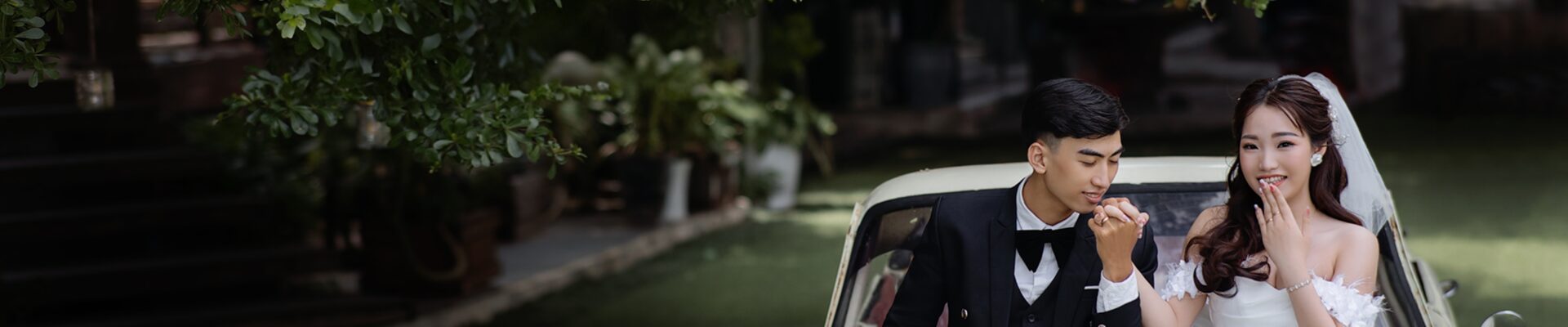
On today’s Spotlight, we look at marriage traditions around the world. Before some wedding ceremonies, the man must first ask the woman to marry him. In many countries, it is tradition for him to seek her father’s blessing first. It is a sign of respect for the father and for their entire family. Afterward, the man can propose however and whenever he chooses. But in Japan, there is a yunio. This is an engagement ceremony that both families must attend. The two families often meet for the first time at this ceremony. They exchange 9 gifts wrapped in rice paper. These gifts symbolize their hopes for their marriage.
Voice 1
Muslim families in Egypt hold a small engagement ceremony. The woman getting married sits on the floor next to her father. The man who wants to marry the woman sits across from her father. The man places his hand on top of her father’s hand. Then they say the first part of the Islamic holy book, the Fatiha together.
Voice 2
In Chile, the man and the woman wear engagement rings. They place the rings on the third finger of their right hands. When they marry, they move the rings to the third fingers of their left hand.
Voice 1
Just as engagement traditions differ around the world, so do wedding customs. The color of the bride’s dress carries different significance. In Western cultures, the bride wears a white wedding dress. This symbolizes innocence and purity. In Japan, the bride wears a white robe called a kimono for similar reasons. In Eastern countries like China and India, the bride often wears a red wedding dress. This signifies happiness and good fortune. The Chinese wedding dress, Qipao, often features gold to symbolize wealth and power.
Voice 2
For many years in Spain, it was common for the bride to wear a black dress to signify her lifelong commitment to her partner. The Kikuyu people are one of the largest ethnic groups in Kenya. Brides there wear colorful prints to show joy. Malaysian wedding gowns are usually purple or violet. This symbolizes elegance and royalty.
Voice 1
Some mothers give their wedding dresses to their daughters. It is an honor and a special gift. Sometimes the daughter will later pass the wedding dress on to her daughter.
Voice 2
Adele Larson married Roy Stoneberg in Chicago in 1950. She wore a special dress with many unique features. The dress cost one hundred dollars. Three years later, Adele’s sister, Eleanor, got married. Eleanor’s mother offered to take her shopping for a wedding dress. But Eleanor said:
Voice 3
“Well, why would we do that? I will wear this one.”
Voice 1
The tradition of passing Adele’s wedding dress down to other family members continued for generations. Eight brides have worn the same wedding dress. The family has the dress professionally cleaned and stored to preserve it. Each bride has added her own accessories. They even made a book called “The Bride Book” featuring photos of all the brides at their weddings. More recently, Larson Stoneberg’s granddaughter, Serena, got married. Naturally, Serena wore her grandmother’s wedding dress. She said:
Voice 4
“I felt just so happy and honored to be able to wear it.”
Voice 2
Certain cultural traditions are part of weddings. In the United States, the bride picks her wedding dress. Then she plans the ceremony. Sometimes she hires a professional to help organize everything. Or she might do it on her own. It is also a tradition for the newly married couple to dance first at their wedding reception. Before the couple leaves, the bride throws a bundle of flowers behind her to a group of single women. People believe the person who catches the flowers will be the next one to get married.
Voice 1
In Norway, brides wear a silver and gold crown. The crown is decorated with small charms. When the bride moves, the charms make a noise. This sound is believed to scare off evil spirits.
Voice 2
In Armenia, the bride and groom break a plate for good luck. They eat honey to symbolize happiness. The couple also places bread on their shoulders to ward off evil.
Voice 1
In parts of the Congo, a couple is not supposed to smile during the entire wedding. If they smile, others may think they are not taking their marriage seriously.
Voice 2
At the end of a Jewish wedding ceremony, the groom breaks a glass wrapped in cloth. It reminds people of the destruction of the Temple in Jerusalem. It also symbolizes the delicate nature of marriage and how it must be treated with care.
Voice 1
For Christians, the wedding ceremony is more than just the union between husband and wife. Marriage is also seen as a bond between the couple and God. The pair joins with Jesus Christ, who Christians believe is the savior. He is at the center of the relationship. The Christian Bible teaches that marriage is a living picture of the relationship between Christ and the Church. Christian couples are called to love and serve each other selflessly. This reflects Christ’s love for his people. The Christian couple’s wedding bond should demonstrate God’s love and grace in their lives.
Voice 2
At Hindu weddings, the walk to the wedding location is called the Baraat. During the Baraat, the groom rides a horse to symbolize that the groom is ready to take on the responsibilities of marriage. There are music and dancing as the groom rides the horse.
Voice 1
Couples often exchange vows, or promises, during the ceremony before the minister declares them married. In Indian weddings, they perform the Saptapadi. The couple takes seven steps around a sacred fire. Each step accompanies a promise for a joyous life. In Japan during the San-san-kudo ceremony, the bride and groom take three sips from three different cups of a drink called Sake. This symbolizes the union of their families. In Western weddings, the couple takes turns saying a special promise. They each say their names. Then they promise the following:
“To have and to hold from this day forward. For better, for worse, for richer, for poorer. In sickness and in health. To love and to cherish. Until death do us part.”
Voice 2
The great truth about marriage is held in this promise. Proposals, ceremonies, and cultural traditions differ widely around the world. But one thing remains true no matter who is getting married: there can be joy and success. There can be problems and challenges. The married couple can expect good times and difficult days. But the challenges can bring a couple closer together if they let them. They can trust God more during their most desperate moments. They can hold on tighter to each other and to their marriage. The road will become smooth again. They will breathe easily. They will find they have moved closer together. Their marriage will be stronger.
Voice 1
Are you married? What was a unique tradition at your wedding? What was the significance behind the tradition? You can leave a comment on our website at www.spotlightenglish.com. You can also find us on YouTube, Facebook, TikTok, Instagram, and X. You can also get Spotlight episodes delivered directly to your Android or Apple device through our free official Spotlight English app.
Voice 2
The writer of this episode was Peter Anderson. The producer was Michio Ozaki. The voices you heard were from the United Kingdom and the United States. All quotes were adapted for this episode and voiced by Spotlight. No AI or artificial intelligence was used in this episode. Spotlight episodes are written, voiced, and produced by real people for real people, no matter where in the world they live. This episode is called, “We’re Getting Married: Wedding Traditions Around the World.”
Voice 1
We hope you can join us again for the next Spotlight episode. Goodbye.
Questions:
Are you married? What was a unique tradition at your wedding? What was the significance behind the tradition?


I find it interesting how different cultures have their own unique wedding traditions. Do you have a favorite one from the post?
Thank you so much Spotlight
You are very welcome!
Hello,
I got married almost nineteen years ago. I followed some of the traditions in Spain that are usually observed when someone gets married. I wore a white dress, and the groom wore a suit. One thing we did different was that we went together to buy the clothes, which it is not recommended in our tradition.
When the day came, each of us was accompanied by our family to the place where the wedding was held. After the ceremony, the witnesses signed the papers, and right after that, the couple signed them too.
Then the newlyweds went to take some pictures, and afterward, they joined the rest of the guests at the restautant. There, we ate, talked, laughed, and danced. People shouted. “Let them kiss!”
To finish that magnificent day, everybody danced until sunrise.
The day after the wedding, the couple left for their honeymoon.
I am Severino Ramos. I am from Brazil and I live in São Paulo
Dear Spotlight’s team, Andrew Devis, Alice Irizarry, Peter Anderson, and Michio Ozaki
We’re Getting Married: Traditions Around the World
First, I would like to tell you that congratulations on bringing us one more so beautiful episode about marriage. Thanks!
Second, I would like to tell you that I am sorry for stopping hearing you in this so important channel, for some weeks. My apologies!
What happened?
I went out for a walk at the park nearby my home, and it was very warm. I walked in it there about three hours in the sun. When I got home from the park, I started feeling a terrible headache, nausea, and dizziness. I suffered with it during one week. The sun is very shine and beautiful. I like it, but I do not get along with it. The sun is very strong to me.
Of course, I wore a cap on my head, but It was not enough to protect me from the hot sun.
Fortunately, I got better after I had taken some medicines such as dipyrone and metoclopramide. Also, I drank a lot of liquids water, juice, and tea. Thanks, God.
Question 1 –
Are you married?
No, I am not.
Question 2 –
What was a unique tradition at your wedding?
Well, here, the tradition at their weddings happen in the same way from The United States of America.
The bride wears a beautiful white dress, a brilliant, silver and gold crown on her head, and a stylish pair of shoes.
However, the groom wears a formal suit, a tie, and a stylish pair of shoes.
So, at the end of the ceremony, the bride throws a bundle of flowers behind her to a group of single women. We believe to the person who catches the flowers, will be the next one to get married.
Question 3 –
What was the significance behind the tradition?
The white dress symbolizes innocence and purity, and the bundle of flowers symbolizes good luck to the person who catches the flowers. So, the person will be the next one to get married.
I appreciate it
Thank you so much for bringing us that so significant episode.
Stay with God.
Severino Ramos
I’m from Iraq, and these are our traditional marriage customs.
First, I take my family to her family’s house so that both families can meet each other and get to know one another. If both families agree to the marriage, we read Al-Fatiha, which is an Islamic tradition.
After that, we choose a day to go and buy a gold ring for her, and she buys a silver ring for me. I have to take my mother with me, and she takes her mother with her, because according to our traditions, we are not allowed to go out together alone.
The next day, I take my whole family and our relatives to her house for the engagement ceremony. I put the ring on her finger, and she puts the ring on my finger. We take photos, celebrate, and dance together.
This is called the engagement ceremony. After that, the man and woman usually choose a date for their wedding.
Thank you for sharing your marriage custom!