
Voice 1
Welcome to Spotlight. I’m Andrew Devis.
Voice 2
And I’m Alice Irizarry. Spotlight uses a special English method of broadcasting. It is easier for people to understand, no matter where in the world they live.
Click here to follow along with this program on YouTube.
Voice 1
He kept many of his films in his house. He had been making films at home for decades. He was not a professional filmmaker. He just loved doing it. He used a small camera that he could hold easily in his hands. He filmed his family on trips or around their homes. But he recently bought a new camera. It was one of the best cameras available to non-professional filmmakers. He worked in Dallas, Texas. The President of the United States was coming to his city. He decided to use his new camera to film him. He had no idea he was about to film the most famous home movie in history.
Voice 2
On today’s Spotlight, we look at the life of Abraham Zapruder . Who was he? Why was his film so important? How did it change the world? How did he live with what he had seen?
Voice 1
His employees called him “Mister Z.” Zapruder owned a dressmaking company in Dallas. He was known as a fair and respectful boss. He had been married for thirty years. He was thinking about leaving his job. He wanted to travel around the world with his wife. He wanted more time to work with plants and to play music. He wanted to relax and enjoy the rest of his life. But his life changed on that horrible day in Dallas.
Voice 2
It was November 22, 1963. The President of the United States, John F. Kennedy, was coming to Dallas. He would drive near Zapruder’s business. Zapruder liked President Kennedy very much. He wanted to film Kennedy while he was there. One day he would show this film to his grandchildren.
Voice 1
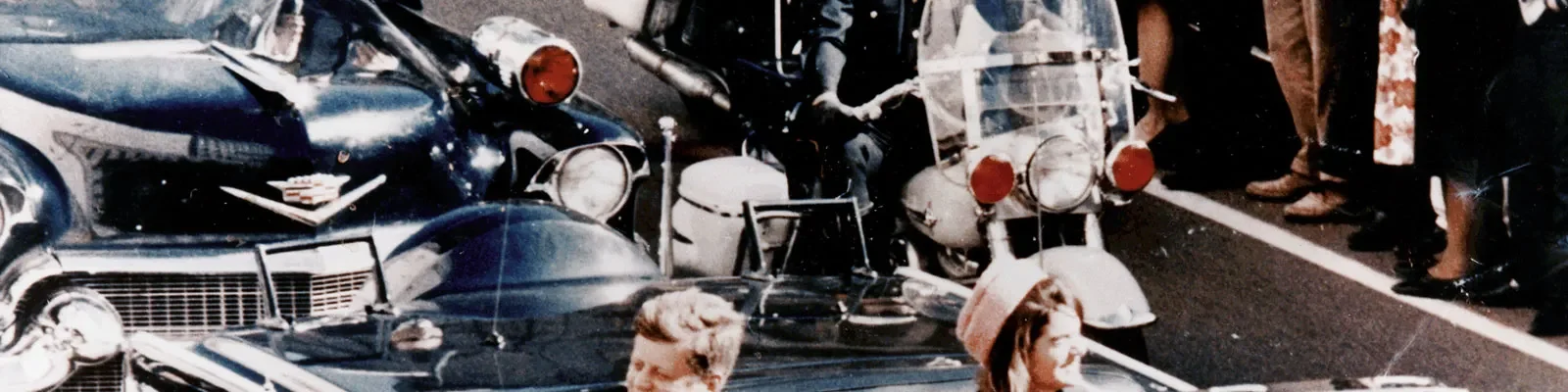
President Kennedy was riding in a car with no top. It was called a limousine. People could see him easily. The President’s car was in a long line of cars called a motorcade. The motorcade drove through the city of Dallas. It would pass through Dealey Plaza. This was a location very close to Zapruder’s business. Zapruder and a friend hurried through Dealey Plaza. He climbed on top of a small structure one meter high. Zapruder’s friend supported him from behind so he would not fall. Zapruder had a great view looking down. President Kennedy’s motorcade would pass right below him. Zapruder started filming with his camera.
Voice 2
The entire film lasted only 26 seconds. It was in color but without sound. It showed President Kennedy and his wife sitting in the back seat of the limousine. Two men protecting the President and his wife sat in the front seat. In a few moments, the motorcade would pass by Zapruder. He got his camera ready. Then there was a loud sound. Zapruder and other witnesses thought it was a gunshot. As Kennedy drove toward Zapruder, another gunshot sounded. This time, Zapruder saw Kennedy lean forward. The President grabbed his throat. When Kennedy was in front of Zapruder, about twenty meters away, a final gunshot sounded. The President was shot in the head. He fell over in the seat. Their car drove out of sight. Zapruder stopped filming. He could not believe what he had just seen. Someone had shot the President right in front of him.
Voice 1
Zapruder knew his film would be very important. The police would want to study it. Other people also filmed the event. But Zapruder’s film was the only clear record of Kennedy’s death. A Dallas reporter saw Zapruder’s camera. The reporter asked if he had filmed the shooting. Zapruder said yes. The reporter told a top law enforcement officer. The officer developed the film so it could be viewed. Then he made three copies for different law agencies. Zapruder kept the original copy. He had to decide what to do with it.
Voice 2
Zapruder was one of the first people in the world to understand what had happened. He saw everything through his camera. Almost everyone else was uncertain. When Zapruder got back to work, his friends told him President Kennedy was just injured. He was simply being taken to the hospital. But Zapruder knew the truth. He responded:
Voice 3
“They killed him. They killed him.”
Voice 1
The next day, Zapruder decided to sell the rights to his original film to Life magazine for $150,000. He asked Life to leave out one moment from the film. This was the moment when the bullet struck President Kennedy’s head. It was a horrible image that Zapruder did not want the world to see. He wished he had never seen it. Life magazine agreed.
Voice 2
Zapruder chose to sell his film to Life magazine because he respected their work. He thought they would handle the film with good taste and judgment. One of the magazine’s editors, Dick Stolley, said:
Voice 4
“Zapruder was very worried that the film would be used in an offensive way. He did not want it to go to the wrong person. You could see that President Kennedy was a man in great pain.”
Voice 1
After President Kennedy’s death, a special group of men investigated the murder. The United States government wanted to know for certain who had shot the President. The group was called the Warren Commission. They discovered that one man, Lee Harvey Oswald, had shot President Kennedy. He shot with a rifle from a window on the top floor of a building. The building was not far from where Zapruder had filmed.
Voice 2
Over the years, many people questioned whether Oswald had acted alone. They thought other shooters might have been involved. They offered various opinions about why the President had been killed. They wondered if it was something political. They made theories about who was behind it and why.
Voice 1
But none of it changed what Zapruder had witnessed. Nothing could erase his memory of Kennedy’s death. He struggled with terrible dreams for the rest of his life. He felt guilty for making money from his film. He decided to give some of the money to the family of a police officer whom Oswald had also murdered that day.
Voice 2
When Zapruder testified in front of the Warren Commission, he talked about living with the awful images in his mind. He said:
Voice 3
“I have seen it so many times. I have nightmares. They come every night. I wake up and see the images.”
Voice 1
Zapruder became famous for filming a president’s murder. But his family remembered him as a loving man who laughed at his own silly jokes. They knew the man behind the camera. What he filmed was much less important to them. The stress of living with what he had seen became unbearable. His family said he never used a camera again.
Voice 2
Zapruder died from stomach cancer in 1970, almost seven years after President Kennedy’s death.
Voice 1
Did you know about President Kennedy’s killing before this script? What would you have done if you had been the one who filmed the killing? You can leave a comment on our website at www.spotlightenglish.com. You can also find us on YouTube, Facebook, TikTok, Instagram, and X. You can also get Spotlight episodes delivered directly to your Android or Apple device through our free official Spotlight English app.
Voice 2
The writer of this episode was Peter Anderson. The producer was Michio Ozaki. The voices you heard were from the United Kingdom and the United States. All quotes were adapted for this episode and voiced by Spotlight. No AI or artificial intelligence was used in this episode. This episode is called, “Twenty-Six Seconds That Changed One Man’s Life.”
Voice 1
We hope you can join us again for the next Spotlight episode. Goodbye.
Question:
Did you know about President Kennedy’s killing before this script? What would you have done if you had been the one who filmed the killing?


I am Severino Ramos. I am from Brazil and I live in são paulo
Dear Spotlight’s team: Andrew Devis, Alice Irizarry, Peter Anderson, and Michio Ozaki
How is it going?
Twenty-Six Seconds that Changed One Man’s Life
First, I would like to thank you for bringing us one more so significant episode. Thinks!
Question 1 –
Did you know about President Kennedy’s killing before this script?
Yes, I did.
When that terrible action happened to President Kennedy in Dallas in The United States of America, I was not born yet.
However, I grew up hearing that awful news on television and in the newspaper. I always liked to watch news on television since I was a child. Sometimes, my mom used to tell me that kid, please I want not you see that bad news. It is not good for you at this age.
Stand up from the sofa, right now. Go to your bedroom to play with your toys. So I used to tell her that mom, please I want to see the news, I like President Kenney, I want to know what happened to him.
So, my mom harshly repeated it, please go to your bedroom, right now. And she turned off the television set, to avoid me to see the bad news.
Question 2 –
What would you have done if you had been the one who filmed the killing?
First, immediately, I would have called an ambulance to try to save The President Kennedy.
Second, I woud have called The Police officer to protect the bad situation and to try to arrest the murder.
Third, I would not have sold the film, the images of The President Kennedy’s killing by 150.000.00 dollars. I would have handed those images over to The Police Officer.
Thank you very
Stay with God.
Severino Ramos