
Voice 1
Welcome to Spotlight. I’m Gillian Woodward.
Voice 2
And I’m Patrick Woodward. Spotlight uses a special English method of broadcasting. It is easier for people to understand, no matter where in the world they live.
Click here to follow along with this program on YouTube.
Voice 1
A music show is taking place. 50,000 people are there. A bag sits alone under a seat. A security guard notices the bag. He follows the rules. He tells the police about the bag. He does not know there is a bomb in it. But he knows any bag left alone must be examined. He warns people to move away from the area. Not all the police officers take him seriously. They think he is worrying too much. But the officers help people move away from the bag. The police call the bomb team. The team looks inside the bag. They find a bomb. A few minutes later, the bomb explodes. Not everyone had moved far enough away. The bomb kills two people and injures over 100 others.
Voice 2
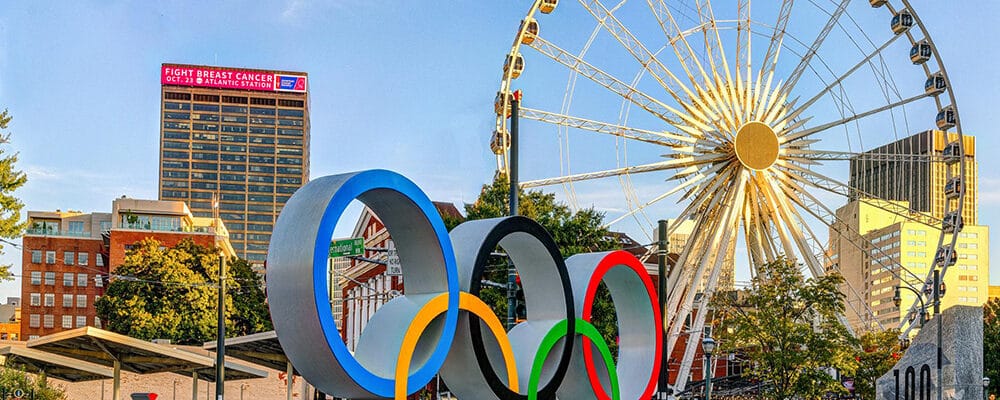
On today’s Spotlight, we look at the security guard, Richard Jewell. Richard found the bag during the 1996 Summer Olympic Games. The music show took place in Centennial Olympic Park. The Atlanta Committee for the Olympic Games built Centennial Olympic Park. Award ceremonies and live shows took place in the park.
Voice 1
Richard Jewell grew up in Atlanta, Georgia. After Jewell completed high school, he fixed cars for a living. Jewell had several jobs over the next twenty years. He worked as a hotel security guard. He also worked for the Habersham County Sheriff’s Office. Jewell’s dream was to work in law enforcement. But he sometimes became too aggressive when enforcing laws and rules. Once while working part-time as a security guard, he approached two people at a building. He pretended to be a police officer and arrested them. Jewell later worked as a security officer at a college. But many students said that he was too hard on them for unimportant things. Jewell finally became an assistant police officer. But Jewell had an accident with his police car and left the police force.
Voice 2
In 1996, Jewell was hoping to find a security job at the Summer Olympic Games. He moved in with his mother. He got a job working in security at Centennial Park. During a music show, Jewell was walking around making sure people were safe. He also looked for unusual or suspicious things. Jewell saw a bag on the ground underneath a seat. No one was near the bag. Jewell told a Georgia Bureau of Investigation officer about the bag. At first, the officer did not believe it was anything to worry about. With so many people around, there were bags everywhere. Jewell looked for someone searching for a missing bag. He did not find anyone. No one came back for the bag. Jewell finally persuaded the officer to call the bomb team.
Voice 1
But Jewell was not the sort of person who waited around for someone else to fix a problem. He wanted to do something, especially when people were in danger. While the bomb team made their way to the bag, Jewell tried to help. The Historic Times explained:
Voice 3
“Richard had already started moving people away. He even used force because nobody took him seriously. He managed to push over two hundred people away from the seat.”
Voice 2
Then an unidentified man called the police. He said a bomb was in Centennial Park. He said:
Voice 3
“You have thirty minutes.”
Voice 1
The bomb was homemade. The timer on the bomb was not set correctly. It did not go off thirty minutes later. It exploded sooner. The crowd of people had not yet been safely moved away. The bomb killed two people, including a mother in the park with her fourteen-year-old daughter. The bomb injured 111 other people. 24 police officers were hurt.
Voice 2
At first, Jewell received praise for finding the bag and telling the authorities. If he had not, more people would have been killed and hurt. All the other security guards and police officers at Centennial Park either missed the bag or did not take the time to call it in. Only Jewell followed the correct process to make sure the bag was examined. He also started moving people away from the bag before anyone else.
Voice 1
But the head of security at the college where Jewell used to work called the Federal Bureau of Investigation, or FBI. He told them that Jewell owned books about how to make a bomb. He told them Jewell was intense. He said students had not liked Jewell. The FBI immediately began investigating Jewell. They thought he might have made the bomb and put it in the park. The FBI wondered if Jewell planted the bomb so that he could be the one who found it. By saving lives, Jewell might get a better job in law enforcement.
Voice 2
The FBI told a reporter for a local Atlanta newspaper, The Atlanta Journal-Constitution, that they were investigating Jewell. They told the reporter that Jewell seemed like the sort of person to explode a bomb in a public place. Usually, a bomber is frustrated and angry with society. He wants people to notice him.
Voice 1
The Atlanta Journal-Constitution published a story the next day that Jewell was the FBI’s top suspect. Suddenly, reporters around the world talked about Jewell differently. He was no longer a hero. People did not trust Jewell. Reporters waited all day outside his mother’s home. Many stories and news broadcasts said Jewell had probably built and planted the bomb. They said Jewell had the knowledge of bombs to build it. They said he wanted to do it because he felt he deserved a better job in law enforcement. They knew Jewell also could get into Centennial Park easily because he was a security guard there.
Voice 2
The FBI questioned Jewell, his friends, family, coworkers, and people who lived near him. They inspected the house where Jewell lived. They dug through the things he threw away. They tried to find any solid evidence that Jewell was the bomber. But they could not. They also could not explain how Jewell could have made the phone call to the police warning them of the bomb. Jewell was seen by police officers in Centennial Park around the time of the phone call. The phone call was made from a payphone that was a four-minute walk away. A payphone is a public phone that people pay to use. Jewell could not be in two places at once. Finally, after 88 days, the FBI announced that Jewell was no longer a suspect.
Voice 1
Keven Salwen co-wrote a book about Jewell and the FBI’s investigation into the bombing. Salwen said:
Voice 4
“Jewell was an overweight guy in his early thirties. He lived in his mother’s home. He was over-enthusiastic. He was the unfair target first of the FBI and then later the media.”
Voice 2
The FBI in Atlanta and local Atlanta newspapers felt great pressure to find the person responsible for the bombing. With people all over the world watching coverage of the Olympic bombing, they needed to act fast. It was tragic enough that the bombing could not be stopped. If local authorities did not find the bomber quickly, they would look like they could not do their jobs. They might even get fired.
Voice 1
Two years after the bombing in Centennial Park, law enforcement finally found the person who planted the bomb. They used evidence found at several different bomb sites to identify Eric Robert Rudolph. They put Rudolph on the FBI’s Ten Most Wanted Fugitive list. They hunted Rudolph for five years. He was hiding in the mountains of North Carolina. Law enforcement officers found Rudolph and arrested him. Two years later, Rudolph finally admitted planting the bomb at Centennial Park during the Summer Olympics in Atlanta. Nine years after Jewell was falsely blamed, the world learned who had really done it.
Voice 2
Jewell spent those nine years working for law enforcement in Meriwether County, Georgia. He got married. Jewell took several television networks and newspapers to court for making false statements that changed how people saw him. He won most of the lawsuits. Jewell used the settlement money to buy houses for himself and his mother. Jewell received an apology from Janet Reno, the attorney general, at the time. Georgia’s governor also apologized.
Voice 1
But Jewell never felt completely free from judgment. He knew some people would always wonder if he had really bombed the Olympics. For the first three months after the bombing, the media told everyone that Jewell was responsible. Even though Rudolph later admitted to the bombing, there would always be people who could not trust Jewell. That part hurt Jewell most. His dream was to protect people. Jewell wanted everyone to know they could trust him. Two years after Rudolph admitted to the crime, Richard Jewell died of heart disease. He was 44 years old.
Voice 2
Have you ever heard of Richard Jewell? Would you have thought Jewell was the bomber right after the Olympic bombing? How would you have reacted if you had been Jewell and been falsely accused of a crime? You can leave a comment on our website at www.spotlightenglish.com. You can also find us on YouTube, Facebook, TikTok, Instagram, and X. You can also get Spotlight episodes delivered directly to your Android or Apple device through our free official Spotlight English app.
Voice 1
The writer of this episode was Peter Anderson. The producer was Michio Ozaki. The voices you heard were from the United Kingdom and the United States. All quotes were adapted for this episode and voiced by Spotlight. No AI or artificial intelligence was used in this episode. Spotlight episodes are written, voiced, and produced by real people for real people, no matter where in the world they live. This episode is called, “The H rr ero Who Was Blamed for Murder.”
Voice 2
We hope you can join us again for the next Spotlight episode. Goodbye.
Question:
Have you ever heard of Richard Jewell? Would you have thought Jewell was the bomber right after the Olympic bombing? How would you have reacted if you had been Jewell and been falsely accused of a crime?

The only important judgment is that of our conscience. We needn’t worry about the innocent, because they need nothing; they already have everything. They have the truth that sets them free. When Richard Jewell arrived at the entrance to heaven, Saint Peter immediately opened the gates and all the guests threw him a huge party, and he was very happy.
I am Severino Ramos. I am from Brazil, and I live in São Paulo
Dear Spotlight’s team, Michio Ozaki, Peter Anderson, Patrick Woodward, and Gillian Woodward
How are you?
The Hero Who Was Blamed for Murder
First, I thank you for bringing us follwers’ Spotlight Podcast that significant episode. Thanks.
Question – 1
Have you ever heard of Richard Jewell?
No, I have not.
Question – 2
Would you have thought Jewell was the bomber right after the Olympic bombing?
No, I would not have.
Actually, I do not use to judge people before the facts are investigated. Furthermore, we know that the evil, the envy, bad people, traps, ambitions, greed exist in the mind of some people. For the reason, we have to ask God for protection against these bad things like that.
Question – 3
How would you have reacted if you had been Jewell and been falsely accused of a crime?
Well, first, I would have asked God to protect me from false blame and from bad people.
Second, I would have been disappointed with the people who were accused of murder that I would not have committed against anyone.
Third, I would have gone by myself to the Police Officers’ Station to talk about my innocence and try to prove to them that terrible action that I would not have done.
Fourth, I would have seen a lawyer to ask him to defend me against that blame.
Fifth, I would have prayed to God to protect me against all the bad things at that moment and forever.
Finally, may I tell you that, please?
Watch out when you are going to talk about someone that you do not like him or her much.
It is a very dangerous thing to do. Never say that I would like that bad thing to happen to him or her. If someone hears what you said, and whether that bad thing happened to that person that you do not like very well, you can be blamed about the bad action. We should keep good thoughts in our mind. Be careful about that.
Thank you so much
I really appreciate it
Stay with God
Severino Ramos