
Voice 1
Welcome to Spotlight. I’m Patrick Woodward.
Voice 2
And I’m Alice Irizarry. Spotlight uses a special English method of broadcasting. It is easier for people to understand, no matter where in the world they live.
Click here to follow along with this program on YouTube.
Voice 1
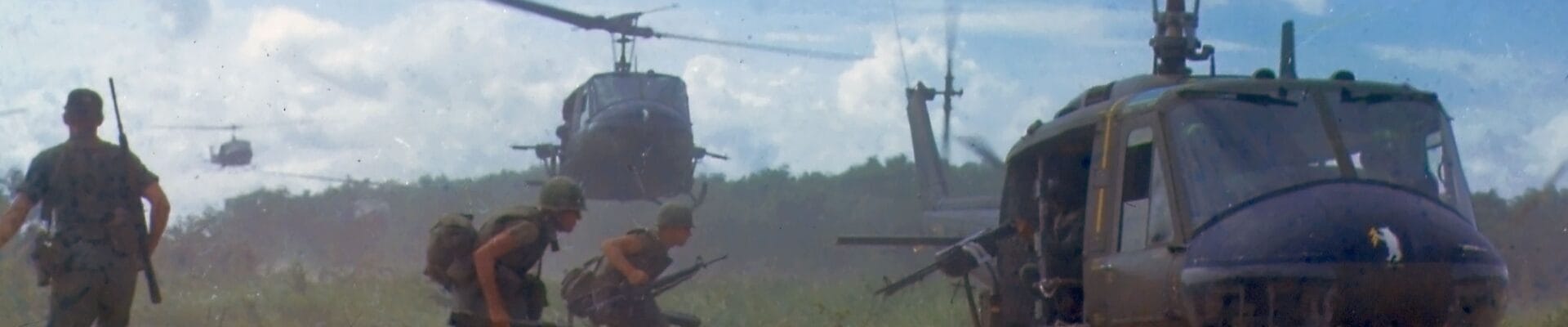
In 1967, 20,000,000 people lived in North Vietnam. That same year, almost 200,000,000 people lived in the United States of America. The United States had greater military size and power. They had a technological advantage over North Vietnam. It seemed like North Vietnam had no chance to beat the United States in the Vietnam War. But the North Vietnamese had one powerful advantage right under their feet.
Voice 2
Today’s Spotlight is about the tunnel system used by the Viet Cong during the Vietnam War. The Viet Cong were a South Vietnamese communist force that fought alongside the North Vietnamese Army, or NVA. The Viet Cong were known for their skills in jungle warfare. These unique skills and their tunnel system helped hold off their enemies.
Voice 1
After World War II, Vietnam’s government failed. France once ruled the country. They used this opportunity to invade Vietnam again. But Vietnamese communist rebels defeated them. In 1954, the Geneva Accords temporarily split Vietnam in half between the North and the South. Democratic elections were supposed to happen in 1956 to reunite the country. South Vietnam and the United States refused to sign the Accords because they wanted the United Nations to watch over the elections. North Vietnam and the Soviet Union did not want the United Nations’ guidance. Vietnam remained divided.
Voice 2
North Vietnam wanted to unify the entire country under a single communist government. Communists believe in sharing wealth among citizens according to need. A strong, single party government usually guides where money goes. The South Vietnamese government wanted more democratic leadership like in the West. The United States tried to help South Vietnam stop the spread of communism. U.S. military advisers went to Vietnam during the 1950s. More came during the early 1960s. Active U.S. combat troops were introduced in 1965. They fought in Vietnam for eight years. United States combat units left the country in 1973. Two years later, South Vietnam fell under North Vietnam’s control. Vietnam remains one of only five communist countries today.
Voice 1
The Viet Cong understood they would struggle in direct combat with the larger, better-equipped United States military. They had to use guerrilla warfare. This is when small groups of men surprise a bigger, more traditional military force. The Viet Cong built traps to injure and kill enemy troops. They also built more tunnels.
Voice 2
The communists in Vietnam began digging tunnels in the 1940s during their war with the French. At first, the tunnels only covered short distances. By the Vietnam War in the 1960s, some tunnel networks covered over two hundred and fifty kilometers.
The entrances to the tunnels were small and hidden under leaves or mud. Sometimes the Viet Cong placed entrances in animal pens. They often built false tunnels that led nowhere. These hidden tunnels were set with explosives to injure and kill enemy troops. The Viet Cong used layers of thicker dirt called clay to build the tunnel walls and ceilings. They dug most of the tunnels during the rainy season when the ground was easier to work with. They often dumped soil in rivers or hid it so that no one would see them digging.
Voice 1
They built different kinds of tunnels. The Viet Cong used short tunnels for hiding and surprise attacks. They used deeper tunnels for command areas, medical stations, sleeping, and moving groups of soldiers across large areas. They hid in safety deep within the tunnels during U.S. bombing attacks. Tunnels had places to cook, living areas, and even entertainment spaces. They had systems to move air. They had watertight trapdoors to prevent tunnels from being flooded by water or gas. They used rubber, wooden planks, and other everyday materials to make the doors stronger. The Viet Cong became expert diggers. An American soldier who served two tours in Vietnam said:
Voice 3
“Give me a group of Viet Cong armed with digging tools, and we will tunnel out all of Southeast Asia.”
Voice 2
Thousands of Viet Cong lived underground during the Vietnam War. Some children went to school. Some even got married in the tunnels. Some civilians only came out to tend to their crops. Despite the Viet Cong’s engineering and digging skills, the tunnels were still a dangerous place to live. Tunnels were damp and filled with poisonous spiders, snakes, and rats. Many Vietnamese caught malaria and died. Malaria was the second leading cause of death after battle wounds.
Voice 1
It was very difficult for United States soldiers to find tunnels because they were hidden well. The United States even built a major base on top of a massive tunnel system in Cu Chi. But if U.S. troops did find a tunnel, they had to search for enemy soldiers and important documents. This was extremely dangerous. The tunnels were narrow and dark. U.S. soldiers called them the “Dark Echo.” Viet Cong often left explosive grenades, pointed sticks, poison gas, or even snakes as traps for enemy soldiers. Most of the tunnels had several levels resembling a twisting maze. U.S. soldiers got lost in the tunnels.
Voice 2
The United States picked small soldiers to explore these tunnels. They called them “tunnel rats.” Tunnel rats usually explored a tunnel with only a flashlight and a small gun. Sometimes a second soldier followed behind. But often a soldier went alone into the Dark Echo with no idea of what he would find.
Voice 1
The North Vietnamese Army’s tunnel system was far more complex than the United States military had anticipated. Philip Caputo was a United States Marine during the Vietnam War. He said:
Voice 4
“We fought a formless enemy who disappeared like the morning jungle mists, only to reappear in some unexpected place. It was a wild, periodic sort of combat. Most of the time, nothing happened. But when something did, it happened quickly and without warning.”
Voice 2
Duong Thuy Nguyen grew up in Hanoi, Vietnam. His grandmother was a war photographer in Quang Tri during the Vietnam War. Quang Tri is on the border between North and South Vietnam. It was the most attacked city during the Vietnam War. She told Nguyen about one period of bombing that lasted 81 days. Some of her teenage friends were soldiers in the tunnels. One day during the bombing, the soldiers got a rare treat – a cup of coffee was passed down to them. She told Nguyen:
Voice 5
“They knew they were not living very long to taste coffee any other time. So they passed the coffee around. Each of the twenty people took a single sip. The coffee never made it to the last five people. The tunnel collapsed and most of them were killed.”
Voice 1
During the second half of the twentieth century, Vietnam fought in a series of brutal, devastating battles that cost the lives of millions of Vietnamese. For thirty years, Vietnam fought in almost continuous conflict against the French, the United States, Cambodia, and China. The Vietnamese refer to the Vietnam War as the “American War” because they had so many battles with different nations. Some young Viet Cong soldiers thought they were still fighting the French when they were battling the United States. Many soldiers spent all or most of their lives at war.
Voice 2
Nguyen Hoa Giai fought with the Viet Cong for almost twenty years. When he was finally allowed to return home, he walked the trail to his village. Things were different in his village. Signs were gone, no one else was walking the trail, and everything was quiet. When he reached his village, he discovered it was gone. His village had been destroyed and almost everyone was dead. Giai said:
Voice 6
“Everyone but my youngest brother was gone. He would die during the Chinese War five years later. I am not special. Ask any older Vietnamese person: they have all lost many, many loved ones.”
Voice 1
Giai moved to Saigon. He had spent most of his life away from society. Giai did not know what to do. All he knew was how to hide and kill. Giai was suspicious of everyone and everything. He thought bombs were hidden everywhere. Giai had to be reminded constantly to pay for things because he was used to taking them. Giai struggled with Post Traumatic Stress Disorder and depression. He thought about killing himself.
Voice 2
Giai met others who survived the war. They formed a support group and shared stories and experiences. Giai found strength and hope in his new friendships. He got married and started a family. Giai even forgave the United States and everyone else for their involvement in the war. Giai said:
Voice 6
“The United States, Australia, and South Korea all apologized for their role in the war. Today, the United States is viewed favorably by over three-quarters of Vietnam’s population.”
Voice 1
A few years ago, Giai returned to his village that had been destroyed. It is now a forest. But someone made a simple memorial with trees growing around it marking the burial place of those killed. Giai felt peaceful seeing it. It is a small remembrance of the great sacrifice of so many.
Voice 2
Did you know that the Viet Cong used tunnels during the Vietnam War? Did you know that they are still tourist attractions? Would you be interested in visiting them? You can leave a comment on our website at www.spotlightenglish.com. You can also find us on YouTube, Facebook, TikTok, Instagram, and X. You can also get Spotlight episodes delivered directly to your Android or Apple device through our free official Spotlight English app.
Voice 1
The writer of this episode was Peter Anderson. The producer was Michio Ozaki. The voices you heard were from the United Kingdom and the United States. All quotes were adapted for this episode and voiced by Spotlight. No AI or artificial intelligence was used in this episode. Spotlight episodes are written, voiced, and produced by real people for real people, no matter where in the world they live. This episode is called “The Tunnels of the Vietnam War.”
Voice 2
We hope you can join us again for the next Spotlight episode. Goodbye.
Questions:
Did you know that the Viet Cong used tunnels during the Vietnam War? Did you know that they are still tourist attractions? Would you be interested in visiting them?



The tunnels are located in Cu Chi district (it’s about 45km in the North West of Ho Chi Minh City, it is located at the end of Ho Chi Minh trail, the secret way is from the North to the South…) so it’s called Cu Chi tunnels. It is one of tourist places in particular in the South of Viet Nam, it welcomes thousands tourists everyday!
Vietnam has gone through many wars, but the Vietnamese people have always relied on and hoped to live in peace and are ready to be friends with all countries in the world.
The episode is very nice but the pronunciation of Vietnamese names is not correct enough.
Có nhiều thông tin không đúng sự thật á bạn, đọc kĩ nhé.
I imagine Vietnam as a beautiful country full of color and life, and I’m happy that it can finally live in peace. I also wish the Palestinians in Gaza an end to their suffering.
First of all, I would like to thank the program for taking the time to research and write about a part of Vietnam’s heroic history. However, there are many points in the article that I do not agree with.
First, the term ‘Viet Cong’ was a disdain label used by the U.S. to refer to our national liberation forces. It would be more appropriate and respectful to use the term ‘Viet Minh.’
Second, our country, Vietnam, is one; why did the U.S. come and try to divide it in two, under the guise of ‘helping the South’? If we were to come to your country, establish an autonomous community, and claim it was to ‘help the people,’ would that be acceptable?
Third, regarding the attitude of those who survived the war, why did you choose to interview people that no one knows? Our war was for national independence, to liberate our people from the cruel and exploitative rule of invaders, and we volunteered for that cause. We lost many loved ones and many brothers, but we are not sad, stressed, or depressed because we understand that all those sacrifices were traded for the peace and independence our country enjoys today. We always remember their contributions and continue to live and build our nation. There is no shortage of people in my country for you to interview; they would tell you the same thing: loss is painful, but our sacrifice was for a just cause.
When writing about history, you need to be objective. How many crimes has the U.S. yet to disclose? What about when the U.S. military attacked villages and massacred women and children? Our country does not hold onto hatred and is looking toward the future, ready to be friends with the world, but we can never forget history—how could we forget the immense sacrifices made for us to have an independent nation today?
I hope that the program will consider revising the article or removing it.
Thank you for your comment. We appreciate you. We recognize that many people refer to the military of Ho Chi Minh as the Viet Minh, rather than the Viet Cong.
The purpose of the episode was to honor the ingenuity of the tunnel system and to give our audience a sense of how difficult those tunnels were to discover. It was in no way meant to be disrespectful.
We do not aim to cover every aspect of the war, but we do want to give people the opportunity to learn and discuss. We also understand that not everyone will agree with everything presented in Spotlight programs.
Still, we are thankful that you listened and took the time to share your thoughts. Thank you for being part of the Spotlight audience.
Vietnam has an amazing culture